
The Cane Corso is a breed that commands attention not because of aggression or intimidation, but because of presence. Strong, alert, and deeply loyal, this Italian mastiff is a working guardian that thrives under responsible ownership. While its muscular build and confident stance may attract many admirers, the Cane Corso dog breed is not a dog that fits into every home or lifestyle.
This article is written with the intention of providing clear, experience-based, and authoritative information about the Cane Corso dog breed. Instead of focusing only on appearance or popularity, this guide explains what living with a Cane Corso actually involves daily care, long-term health, training responsibilities, and the level of commitment required to raise a stable, well-balanced dog.
For readers researching this breed seriously, this FurryGuide aims to answer not just what a Cane Corso is, but whether this breed is right for you.
Table of Contents
Table of Contents
Origin and History of the Cane Corso
The Cane Corso’s history is deeply tied to human civilization and utility. Its ancestry can be traced back to ancient Roman molossian dogs, which were used in warfare, guarding, and large-game hunting. After the fall of the Roman Empire, these powerful dogs adapted to rural life, where they became invaluable protectors of farms, livestock, and families.
For centuries, the Cane Corso dog breed served as a working guardian rather than a companion breed. Its role demanded intelligence, independence, and restraint traits that remain deeply embedded in the breed today. During the 20th century, industrialization reduced the need for such dogs, and the breed nearly vanished. Dedicated breeders later revived and standardized the Cane Corso, preserving its working temperament while refining its structure.
Modern Cane Corsos still carry the mindset of a guardian. They are not reactive by nature, but they are observant, decisive, and highly aware of their surroundings.
Physical Appearance and Breed Characteristics
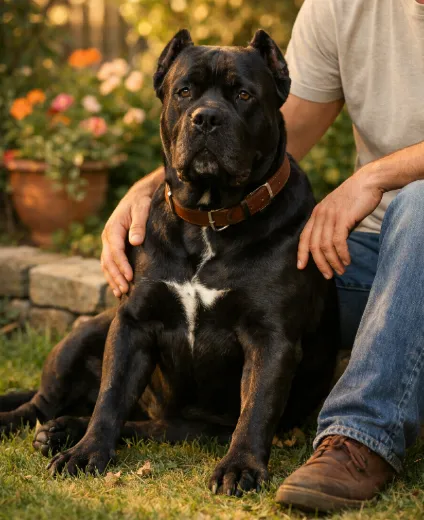
The Cane Corso dog breed is a large, athletic dog built for power and endurance rather than bulk alone. Its body is well-proportioned, with strong bone structure and clearly defined muscles. Despite its size, the breed is agile and capable of quick movement when necessary.

The Cane Corso belongs to the category of powerful guardian dogs and is best understood within the broader context of different dog breeds, where size, temperament, and care needs vary significantly.
Physical Characteristics Overview
| Trait | Description |
| Size category | Large to giant dog |
| Height | Approximately 23–28 inches |
| Weight | Roughly 85–120 pounds |
| Build | Muscular, athletic, balanced |
| Coat type | Short, dense, smooth |
| Common colors | Black, gray, fawn, red, brindle |
| Lifespan | Around 9–12 years |
The head of Cane Corso dog breed is broad with a powerful jaw, contributing to its serious expression. The coat is short and low-maintenance, though it does shed seasonally. Overall, the breed’s appearance reflects strength with control rather than exaggeration.
Cane Corso Dog Breed Temperament and Personality
Temperament is the defining characteristic of the Cane Corso. This breed is calm, confident, and deeply loyal to its family. Unlike breeds that seek attention from everyone, the Cane Corso tends to be reserved with strangers while remaining affectionate and attentive with those it trusts.
This reserved nature is not fear, it is awareness. The breed is highly intelligent and capable of independent decision-making, which is why consistent leadership is essential.
The Cane Corso dog breed does not react impulsively. Instead, it assesses situations before responding. This thoughtful nature makes it an excellent guardian, but it also means the dog requires guidance to understand appropriate responses in modern environments.
When raised properly, Cane Corsos are:
- Stable rather than aggressive
- Protective without being reactive
- Independent yet bonded to their owners
Poor socialization or inconsistent leadership can disrupt this balance, which is why responsible ownership is critical.
Is the Cane Corso a Suitable Family Dog?
In the right household, the Cane Corso dog breed can be an exceptional family companion. The breed often forms strong bonds with children in the household and may display a natural sense of guardianship toward them. However, this does not mean the breed is universally suitable for families.
Because of its size and strength, supervision is essential around young children. The Cane Corso thrives best in families that understand dog behavior, respect boundaries, and provide consistent routines.
This breed does best in homes where:
- Owners understand large working dogs
- Training and structure are consistent
- Socialization starts early
- The dog is treated as a companion, not a status symbol
This breed generally does well in structured households where expectations are clear and interactions are calm and respectful. The Cane Corso is not ideal for first-time dog owners or households that cannot provide clear leadership.
Training the Cane Corso: A Deep, Experience-Based Look
Training a Cane Corso dog breed is not about dominance, it is about leadership, clarity, and trust. This breed is highly intelligent and capable of learning complex behaviors, but it does not respond well to harsh or inconsistent methods.
Owners who want long-term success with this breed should understand the basics of dog training and behavior, as consistency and leadership play a critical role in shaping a Cane Corso’s temperament.
Early training is essential because Cane Corsos mature into powerful adults. Training should begin in puppyhood and continue throughout life, evolving with the dog’s mental and physical development. The Cane Corso dog breed benefits most from training that focuses on:
- Clear communication
- Clear boundaries
- Predictable routines
- Calm corrections
- Positive reinforcement
- Confident leadership
- Consistency
Unlike eager-to-please breeds, the Cane Corso dog breed evaluates commands. When it understands why a behavior matters, compliance becomes reliable. When training lacks consistency, confusion can develop.
Training Stages and Focus Areas
| Life Stage | Training Focus |
| Puppy (8–16 weeks) | Socialization, name recognition, basic commands |
| Adolescence | Obedience, impulse control, leash manners |
| Adult | Advanced obedience, stability, controlled guarding |
| Senior | Mental engagement, routine reinforcement |
Socialization deserves special emphasis. Exposure to people, environments, sounds, and situations builds confidence and prevents fear-based responses later in life.
Exercise and Mental Stimulation Needs
Despite their imposing build, Cane Corsos are not hyperactive dogs. Their exercise needs are moderate but consistent. Daily walks, structured play, and mental stimulation help maintain both physical condition and emotional balance.
Under-stimulated Cane Corsos may develop boredom-related behaviors such as destructive chewing or restlessness. Mental exercise, such as obedience drills or problem-solving tasks, is just as important as physical activity.
This breed thrives on purposeful activity rather than unstructured chaos.
Nutrition and Diet Requirements
Diet plays a crucial role in supporting the Cane Corso’s muscular frame, joint health, and long-term vitality. Because this is a large breed, improper nutrition especially during growth can contribute to orthopedic problems.
Proper training, nutrition, and preventive healthcare are essential parts of responsible pet care, especially for large working breeds like the Cane Corso.
A Cane Corso’s diet should emphasize high-quality protein, controlled fat levels, and balanced nutrients that support joints and digestion. Overfeeding should be avoided, as excess weight places strain on joints and the cardiovascular system.
Feeding Considerations by Life Stage
| Stage | Dietary Focus |
| Puppy | Controlled growth, joint support |
| Adult | Muscle maintenance, energy balance |
| Senior | Joint health, calorie control |
Consistency in feeding schedule and portion size helps prevent digestive issues and obesity. Proper training, nutrition, and preventive healthcare are essential parts of responsible pet care, especially for large working breeds like the Cane Corso.
Grooming and Maintenance
The Cane Corso dog breed has short coat which makes grooming relatively straightforward, but regular care remains important. Weekly brushing helps remove loose hair and supports healthy skin. Seasonal shedding may increase the need for brushing.
Routine maintenance also includes nail trimming, ear cleaning, and dental care. Neglecting these areas can lead to discomfort or infection over time. You can also groom your pet at home, if you are facing any issue in grooming your pet, you can read our article on Dog Grooming at Home, it will give you a step by step routine guide on how to groom your pet easily at home.
Health Issues Common in Cane Corso Dogs
Like all large breeds, the Cane Corso dog breed is predisposed to certain health conditions. Responsible breeding and preventive care significantly reduce the risk of serious issues.
Common Health Concerns
| Condition | Description |
| Hip dysplasia | Joint malformation affecting mobility |
| Elbow dysplasia | Forelimb joint issues |
| Heart conditions | Cardiomyopathy in some lines |
| Eye disorders | Entropion, ectropion |
| Bloat | Life-threatening gastric torsion |
Regular veterinary checkups, proper nutrition, and weight management play a major role in maintaining health. If you are concerned about your dogs skin related problems consider this article: What Causes Skin Problems in Dogs?
Lifespan and Long-Term Quality of Life
The average Cane Corso dog breed lifespan ranges between 9 and 12 years. Dogs that receive consistent training, mental stimulation, proper diet, and preventive healthcare often enjoy a higher quality of life throughout their years.
A well-cared Cane Corso remains alert, confident, and engaged even as it ages.
Pros and Cons of Owning a Cane Corso Dog Breed
Ownership Considerations Table
| Advantages | Challenges |
| Extremely loyal and protective | Not beginner-friendly |
| Intelligent and capable | Requires consistent training and leadership |
| Calm and stable temperament when trained well | Large size demand space andstrength |
| Strong bond with family | Legal or insurance restictions concerns |
This honesty builds trust and helps potential owners make informed decisions. This balance is important for realistic expectations.
Raising a Cane Corso Puppy

Puppyhood is the most influential stage of a Cane Corso’s life. Early exposure, gentle guidance, and consistent routines shape the adult dog’s behavior. Puppies should be taught boundaries while being encouraged to explore the world safely.
Is the Cane Corso Right for You?
The Cane Corso dog breed is best suited for experienced owners who value structure, consistency, and responsibility. This breed is not meant for casual ownership or impulse adoption. When placed in the right environment, however, it becomes a deeply devoted and reliable companion.
Connect With FurryGuide
For more real-life pet care tips, breed guides, and grooming advice:
- Instagram :- @furryguide_
- Facebook :- www.furryguide.com
- WhatsApp Channel :- FurryGuide – Pet Care & Diet Tips
- Pinterest :- @furryguide
Final Thoughts on the Cane Corso Dog Breed
The Cane Corso dog breed is not a breed to be taken lightly. Its strength, intelligence, and protective instincts demand responsibility and respect. When raised with structure, training, and care, the Cane Corso becomes a calm guardian and devoted family member.
This breed rewards commitment with loyalty and trust but only when ownership is informed and intentional. For the right owner, the Cane Corso is not just a dog, but a lifelong partner built on mutual respect.
Frequently Asked Questions
Is the Cane Corso aggressive?
A properly trained Cane Corso is not aggressive. It is protective, stable, and controlled.
Can first-time owners handle this breed?
Generally, no. Experience with large working dogs is strongly recommended.
Do Cane Corsos bark excessively?
They are typically quiet and vocalize only when necessary.
Are Cane Corsos good with children?
They can be, with supervision and proper training.
Can Cane Corsos live indoors?
Yes, provided they receive sufficient exercise and structure.
How strong is the Cane Corso?
Extremely strong, which makes training and control essential.
Do they shed a lot?
Moderate shedding occurs, especially seasonally.
How much exercise is required?
Moderate daily exercise combined with mental stimulation.
Are Cane Corsos legal everywhere?
Some regions have restrictions or insurance requirements.
What is their average lifespan?
Typically 9–12 years.
Author Note
This guide is written by Ankita, a long-time pet parent and content creator at FurryGuide.com, based on hands-on dog care experience, and reviewed by Satyendra, founder of FurryGuide, focusing on safe and practical pet care.