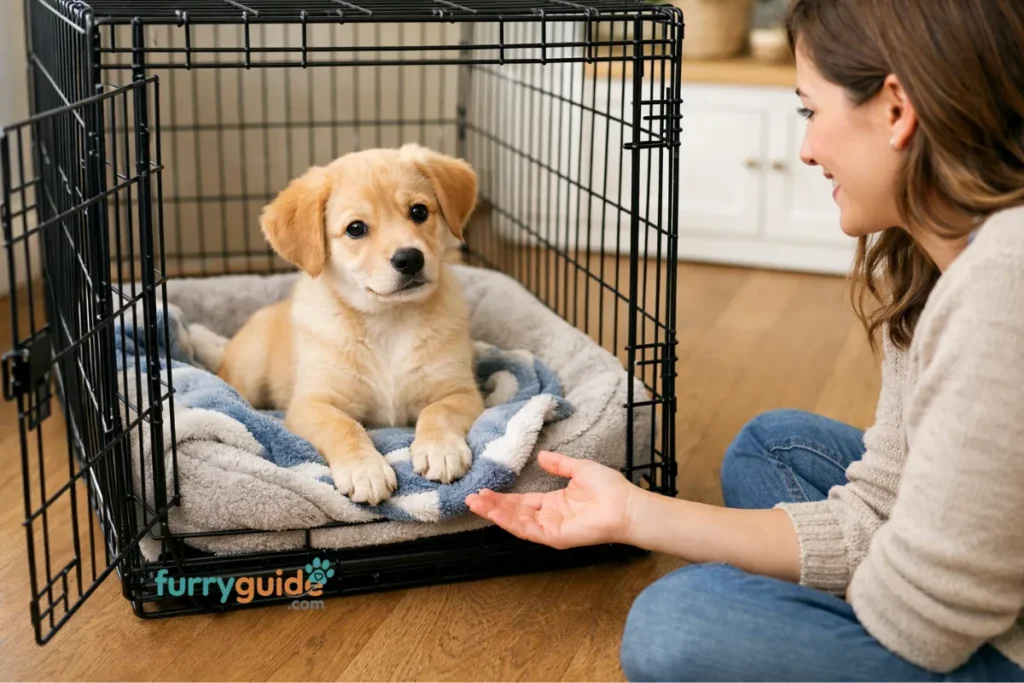
Crate training a puppy is one of the most talked-about topics in dog training and also one of the most misunderstood. New pet parents often worry that using a crate might feel restrictive or unfair, while others hear that it’s the fastest way to house train a puppy and prevent destructive behavior. From real pet-parent experience, crate training is neither cruel nor magical on its own. Its success depends entirely on how it is introduced, how it is used, and how well it fits into your puppy’s daily routine.
When done correctly, crate training a puppy helps create structure, safety, and emotional security. Puppies that are crate trained properly often grow into dogs that are calmer, more confident, and better able to handle alone time. When done incorrectly, however, crate training can lead to fear, stress, and resistance. That’s why understanding the process in depth is far more important than following quick tips or rigid rules.
This FurryGuide is written to help you understand crate training from the puppy’s point of view. Instead of rushing through steps, we’ll focus on building trust, forming positive associations, and using the crate as a supportive training tool not a shortcut or punishment.
Table of Contents
Table of Contents
What Crate Training Really Means for a Puppy
At its core, crate training a puppy is about teaching your dog to feel comfortable and relaxed in a designated space for short, structured periods of time. Puppies, like their wild ancestors, naturally seek small, enclosed areas to rest and feel safe. When a crate is introduced gradually and positively, it can become that safe space.
A properly crate-trained puppy does not see the crate as confinement. Instead, the crate becomes a place to sleep, unwind, and feel secure when the environment feels overwhelming. This sense of security is especially important during the early weeks of a puppy’s life, when everything from sounds to smells to routines is new.
Crate training a puppy also helps pet parents manage common puppy challenges such as chewing, nighttime restlessness, separation anxiety, and accidents in the house. Importantly, crate training is not meant to replace supervision, exercise, or interaction. It works best when used as part of a balanced daily routine. Crate training a puppy is one of the fundamental skills covered under dog training and behaviour, as it helps puppies learn structure, boundaries, and emotional regulation.
When to Start Crate Training a Puppy
Crate training can begin the moment your puppy comes home. Early introduction is often easier because young puppies are naturally adaptable and eager to learn patterns. That said, crate training a puppy is not limited to a specific age. Even older puppies can learn to love their crate when the process is handled patiently.
The key is to match expectations with your puppy’s developmental stage. Very young puppies have limited bladder control and short attention spans. This means crate sessions must be brief, frequent, and always followed by opportunities to relieve themselves, play, and interact.
Trying to rush crate training or expecting long crate stays too early often leads to frustration for both the puppy and the owner. Progress should always be gradual.
Choosing the Right Crate for Your Puppy
Selecting the right crate plays a major role in successful crate training a puppy. The crate should feel comfortable, safe, and appropriately sized not intimidating or cramped.
A crate should allow your puppy to stand, turn around, and lie down comfortably. At the same time, it should not be so large that the puppy can choose one corner as a sleeping area and another as a toilet. For puppies that will grow significantly, crates with adjustable dividers are ideal.
Common Crate Options and Their Purpose
| Crate Type | Best Use | Important Notes |
| Wire crate | Home use, ventilation | Can be covered to create a den-like feel |
| Plastic crate | Travel and transport | Feels more enclosed and secure |
| Soft-sided crate | Calm, older puppies | Not suitable for chewers |
Regardless of the type, the crate should be placed in a location where your puppy can still feel part of the household, especially during the early stages of training.
Introducing the Crate the Right Way
The first introduction sets the tone for the entire crate training process. Puppies should never be forced into a crate or locked inside immediately. Instead, the crate should be presented as a neutral, inviting object.
In the beginning, leave the crate door open and allow your puppy to explore it at their own pace. Placing the crate in a common area helps the puppy associate it with safety and familiarity rather than isolation. Many puppies will naturally investigate the crate out of curiosity, especially if it contains something soft or familiar.
The goal during these early interactions is simple: the crate should not feel scary or restrictive. Once your puppy willingly enters the crate, you can begin building positive associations through calm praise and short periods of rest.
Building Positive Associations with the Crate
Crate training a puppy works best when the crate is consistently linked with positive experiences. Over time, the puppy learns that the crate is a place where good things happen like rest, comfort, and calmness.
This association is built gradually. Initially, the crate might simply be a place where your puppy chooses to lie down for a moment. As comfort increases, you can begin closing the door for short intervals while remaining nearby. These moments should always end before the puppy becomes distressed.
Friendly and people-oriented breeds such as the Labrador Retriever usually respond well to crate training when it is introduced with positive associations and routine. Smaller companion breeds, including Pugs, may require shorter crate sessions early due to their sensitivity and need for frequent interaction.
Puppies read human emotions closely. Staying calm and confident during crate time helps reinforce the idea that there is nothing to worry about. Avoid dramatic exits or emotional reactions, as these can increase anxiety.
Understanding a Puppy’s Crate Training Schedule
A consistent routine is essential for crate training a puppy. Puppies thrive on predictability, and a well-structured schedule helps them understand when it’s time to rest and when it’s time to play.
Crate time should always align with your puppy’s natural rhythms, including sleep cycles, feeding times, and bathroom needs. Puppies typically need to relieve themselves shortly after waking, eating, or playing. Using the crate strategically between these activities supports house training without causing discomfort.
Along with proper feeding, grooming and health routines, crae training plays an important role in overall pet care during a puppy’s early development.
Sample Crate Training Rhythm
| Time of Day | Crate Role |
| Morning | Short rest after potty and play |
| Mid-day | Calm downtime between activities |
| Evening | Wind-down period |
| Night | Safe sleeping space |
This rhythm can be adjusted based on your puppy’s age, energy level, and daily routine. Intelligent working breeds like the German Shepherd often adapt quickly to crate training when the process includes structure, mental stimulation and consistency.
Crate Training a Puppy at Night
Night-time crate training is often the most challenging part for new pet parents. Puppies may cry or whine at night because they are adjusting to being alone, need to relieve themselves, or feel unsure in a new environment.
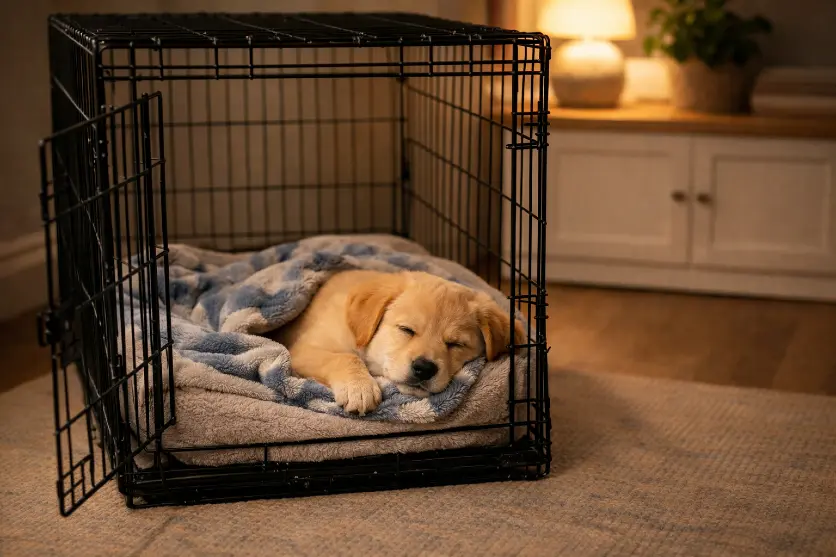
Placing the crate near your sleeping area during the first few weeks often helps. Hearing and smelling you nearby reassures the puppy and reduces night-time anxiety. Over time, the crate can be moved to its permanent location if desired.
Night-time crate training should always be approached with patience. Responding calmly to genuine needs, such as bathroom breaks, helps build trust. Ignoring persistent distress or using the crate as a way to “force” sleep can create negative associations.
Handling Crying and Whining During Crate Training
Crying is a natural form of communication for puppies, but it’s important to understand why your puppy is vocalizing. Some whining occurs during adjustment, while other crying may signal discomfort or anxiety.
Reacting immediately to every sound can accidentally reinforce whining. At the same time, ignoring prolonged distress can damage trust. Observing patterns helps determine whether your puppy is settling or struggling.
With consistency and reassurance, most puppies gradually learn that crate time is temporary and safe. Calm confidence from the owner is one of the most powerful tools during this stage.
Crate Training and House Training: How They Work Together
Crate training a puppy and house training are closely connected. Puppies instinctively avoid soiling their sleeping area, which helps them develop bladder control when crate time is managed correctly.
This does not mean puppies should be left in the crate for extended periods. Instead, the crate supports the learning process by teaching the puppy to wait until they are taken outside. Timely potty breaks are essential to prevent accidents and frustration.
Over time, this routine helps puppies understand where and when it’s appropriate to eliminate, making house training smoother and more predictable.
Common Mistakes That Slow Down Crate Training a Puppy
Many crate training a puppy challenges arise not because the puppy is resistant, but because expectations are mismatched. Using the crate as punishment, forcing long confinement, or introducing it too abruptly can create fear and resistance.
Another common mistake is inconsistency. Allowing free roaming one day and extended crate time the next can confuse puppies. Consistent routines and clear boundaries help puppies feel secure.
Crate training pupppy should always be part of a broader training and socialization plan, not a replacement for interaction or exercise.
How Long Can a Puppy Stay in a Crate?
The amount of time a puppy can comfortably spend in a crate depends on age, temperament, and daily activity. Very young puppies need frequent breaks, while older puppies can gradually tolerate longer rest periods.
General Time Guidelines by Age
| Puppy Age | Comfortable Crate Duration |
| 8–10 weeks | 1–2 hours |
| 11–14 weeks | 2–3 hours |
| 15–20 weeks | 3–4 hours |
| Older puppies | Gradual increase with supervision |
These are general guidelines, not strict rules. Every puppy is different, and flexibility is important. While crate training principlesremain the same, results can vary depending on the puppy’s temperament and size, which is why understanding different dog breeds can be helpful for setting realistic expectations.
Crate Training and Emotional Development
Crate training a puppy is not just about behavior; it also plays a role in emotional development. Puppies that learn to relax alone for short periods often develop better coping skills as adults.
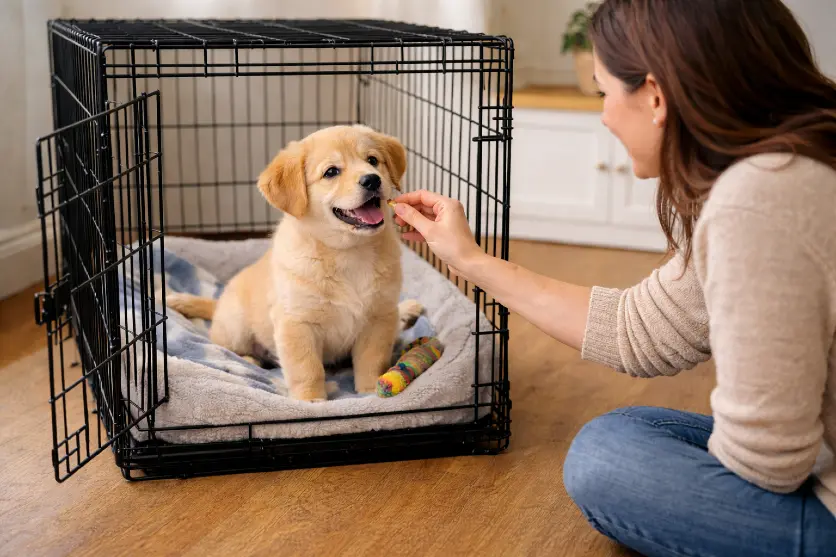
When used correctly, the crate helps prevent separation anxiety by teaching the puppy that alone time is safe and temporary. This skill becomes especially valuable as the dog grows and experiences new environments.
Transitioning Away from the Crate
Crate training a puppy does not mean lifelong confinement. As puppies mature, gain reliability, and demonstrate good behavior, crate use can be reduced gradually.
Some dogs continue to enjoy using their crate voluntarily as a resting place, while others transition to free roaming when unsupervised. The timeline varies based on individual development rather than age alone.
Is Crate Training Right for Every Puppy?
While crate training a puppy works well for most dogs, it’s not a rigid requirement. Some puppies adapt quickly, while others need a slower approach or alternative management strategies.
The key is responsiveness. Paying attention to your puppy’s comfort level and adjusting the process builds trust and long-term success.
My Opinion on Crate Training a Puppy
Crate training a puppy is most effective when it is approached as a relationship-building tool rather than a control mechanism. The crate should represent safety, rest, and predictability, not isolation or punishment.
From real pet-parent experience, puppies that are crate trained with patience and empathy often grow into dogs that are calmer, more adaptable, and easier to manage in everyday life. The process takes time, but the long-term benefits for both the puppy and the owner are worth the effort. When crate training is done thoughtfully, it supports not just better behavior, but a stronger bond built on trust and understanding.
This article is for informational purposes only and does not replace professional veterinary or dog training advice.
Author Note
Every puppy is different, and training is a journey. What works best is patience, consistency, and understanding your dog’s individual needs.
Stay Connected With Us on Social Media
We love sharing practical dog care tips, training insights, and real pet-parent experiences beyond the blog. If you found this guide helpful, you can stay connected with us on social media for regular updates and quick tips.
- Instagram [@furryguide_ ] – Daily dog care tips, training snippets, and behind-the-scenes moments from real dog life.
- Facebook [www.FurryGuide.com] – In-depth posts, new article updates, and community discussions with fellow dog parents.
- WhatsApp Channel [FurryGuide-Pet Guide& Diet Tips] – Quick alerts, important dog care updates, and easy-to-follow tips delivered directly to your phone.
- Pinterest [@furryguide] – Save and explore visual dog care guides, training routines, and infographics you can revisit anytime.
Follow and join us to become part of a growing, responsible dog-parent community.
Previous Posts:
- What It’s Really Like to Raise Lhasa Apso Puppies (First-Time Owner Guide)

- How to Potty Train a Puppy: A Complete Guide for New Dog Parents
- Crate Training a Puppy: A Complete Guide for Raising a Calm and Confident Dog

- Cane Corso Dog Breed: Powerful Guardian Guide Before You Choose One

- Dog Vaccination Schedule: A Complete Guide to Protecting Your Dog’s Health

- What Causes Skin Problems in Dogs? A Complete Guide for Pet Parent