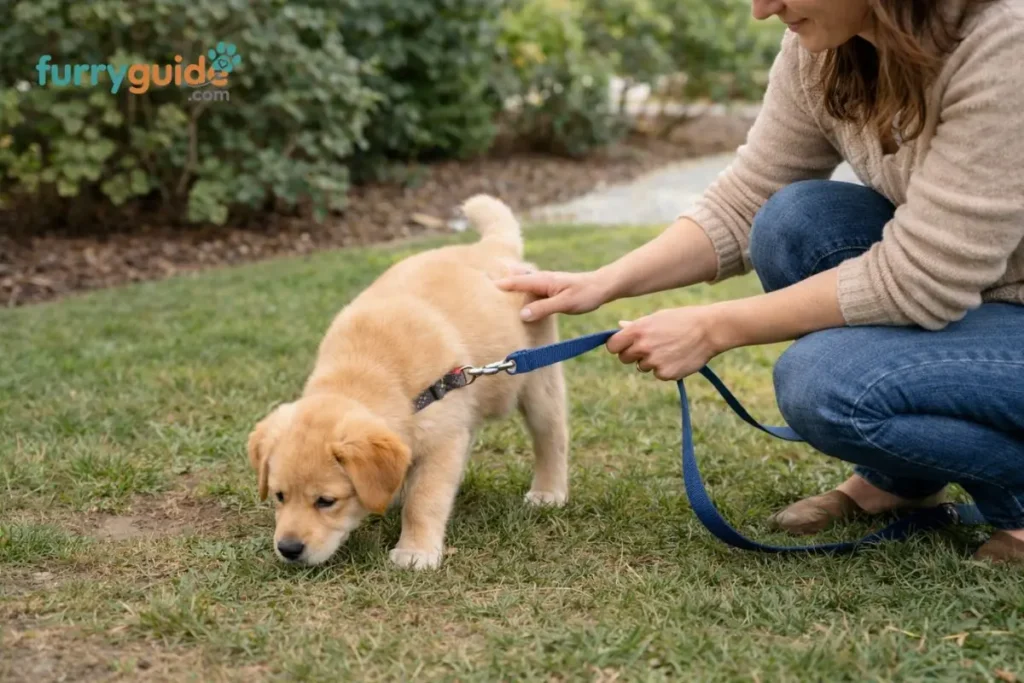
Bringing a puppy home is exciting but potty training can quickly become one of the most stressful parts of early puppy parenthood. Accidents on the floor, sleepless nights, and confusion about schedules are all very common.
Potty training a puppy is one of the first and most important responsibilities of a new dog parent. While it can feel overwhelming in the beginning about how to potty train a puppy, especially with frequent accidents and broken sleep, potty training is a natural learning process for puppies when handled with patience and consistency. Every puppy can learn where and when to go. It simply takes time, routine, and understanding how a puppy’s body and mind work.
In this FurryGuide, you’ll learn how to potty train a puppy, when to start potty training, how long it takes, a simple puppy potty training schedule, and proven tips that actually work in real homes not just theory.
Table of Contents
Table of Contents
When Do You Start Potty Training a Puppy?
You can start potty training a puppy as soon as they come home, usually between 8-12 weeks of age. At this stage, puppies are highly receptive to routines, even though they cannot physically hold their bladder for long periods. Starting early helps prevent confusion and reduces the chance of long-term indoor accidents.
The best age to start potty training is when your puppy is young enough to form habits but old enough to follow a simple routine. Smaller breeds may take slightly longer because they have smaller bladders, while larger breeds often learn faster. Regardless of breed, consistency matters far more than age. Understanding how to potty train a puppy successfully starts with knowing the right age to begin training.
What Age Is Best to Start Potty Training?
- 8–10 weeks: Begin basic routine and habit-building
- 10–12 weeks: Puppies start understanding patterns
- 12+ weeks: Training becomes faster and more reliable
Waiting too long often leads to bad habits forming, which take longer to correct.
How Long Does It Take to Potty Train a Puppy?
One of the most common concerns among dog parents is how long potty training will take. When people ask how to potty train a puppy, they often worry about timelines and accidents. On average, most puppies become reliably potty trained between four and six months of age. However, this timeline can vary depending on the puppy’s breed, environment, daily schedule, and how consistently training is followed at home.
Most puppies do not have full bladder control when they come home. This is completely normal and not a sign of bad behaviour. Potty training is not about discipline or punishment; it is about teaching your puppy habits that will stay with them for life.
It is important to understand that progress is not always linear. A puppy may do well for several days and then have an accident. This does not mean training has failed. Puppies are still learning bladder control, and occasional setbacks are part of the process. With patience and routine, accidents naturally decrease over time. A structured routine is the backbone of potty training a puppy and helps reinforce good habits early.
Realistic Expectations on how to potty train a puppy
- First 4–6 weeks: Frequent accidents
- 2–3 months: Noticeable improvement
- 4–6 months: Most puppies can hold it longer
Even well-trained puppies may still have occasional accidents, this is normal.
Creating a Puppy Potty Training Schedule
A predictable potty schedule is the foundation of successful training. Puppies need to go to the toilet shortly after waking up, after meals, after playtime, and before going to sleep. Young puppies may need to go out every one to two hours during the day, while older puppies can gradually hold it longer.
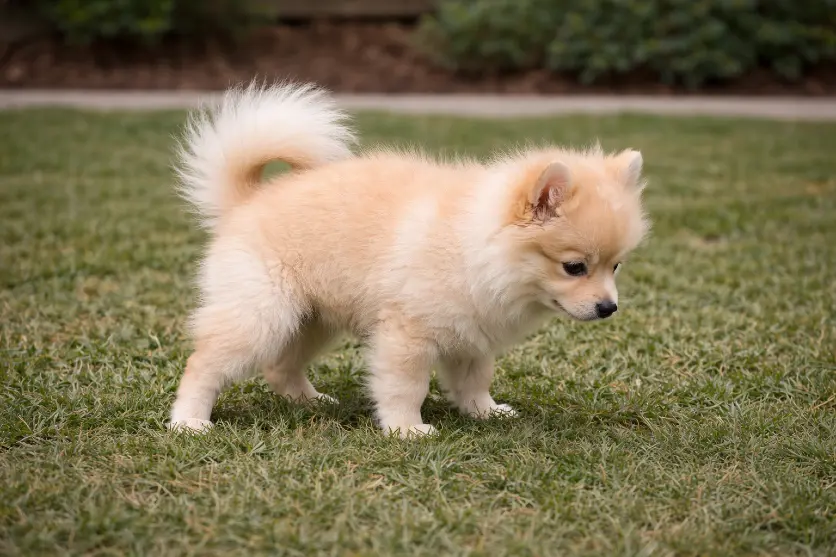
Feeding your puppy at the same times each day makes potty timing more predictable. Water should be freely available during the day, but limiting water intake late at night can help reduce night-time accidents. When your puppy follows a consistent daily puppy care routine, they begin to understand when and where potty time happens.
Training Schedule for how to train a puppy
- Morning: Wake up – potty
- Breakfast: Eat – potty (5–10 minutes later)
- Daytime: Every 1–2 hours
- Evening: After dinner + play
- Night: Final potty break before sleep
Younger puppies may need to go out every 30–60 minutes.
How to Potty Train a Puppy at Home
When learning how to potty train a puppy at home, consistency matters more than strict rules. Many new dog parents struggle because they are unsure how to potty train a puppy without confusion. The key is repetition, calm guidance, and clear routines that show your puppy exactly what is expected.
Potty training a puppy works best when your puppy is taken to the ‘same potty spot every time’. It is the basic step of how to potty train a puppy at home and next smell plays a huge role in how puppies learn, and returning to the same area helps them associate that spot with relieving themselves. Using a simple cue such as “go potty” in a calm voice also helps your puppy connect the action with the command.
Positive reinforcement is essential. When your puppy successfully goes in the right place, praise them immediately and offer a small reward. This moment of encouragement helps your puppy understand that they did the right thing. Delayed praise or punishment does not work, as puppies cannot connect past actions with delayed reactions.
Indoor supervision is equally important. When your puppy is awake and active inside the house, watch for signs like sniffing, circling, or sudden restlessness. These usually indicate that your puppy needs to go out. If you are unable to supervise closely, limiting your puppy’s space or using a crate can help prevent accidents.
Puppy Potty Training Tips That Actually Work
- Stick to a routine, even on weekends
- Clean accidents with enzymatic cleaner
- Limit free roaming in early weeks
- Track potty times to spot patterns
- Be patient, progress is not linear
As a dog parent, consistency matters more than perfection.
How Crate Training Helps with Potty Training
Crate training a puppy can be extremely helpful when potty training a puppy. Puppies naturally avoid soiling the area where they sleep, which makes crates a useful tool for teaching bladder control. The crate should be just large enough for your puppy to stand, turn around, and lie down comfortably. A crate that is too large can lead to accidents inside.
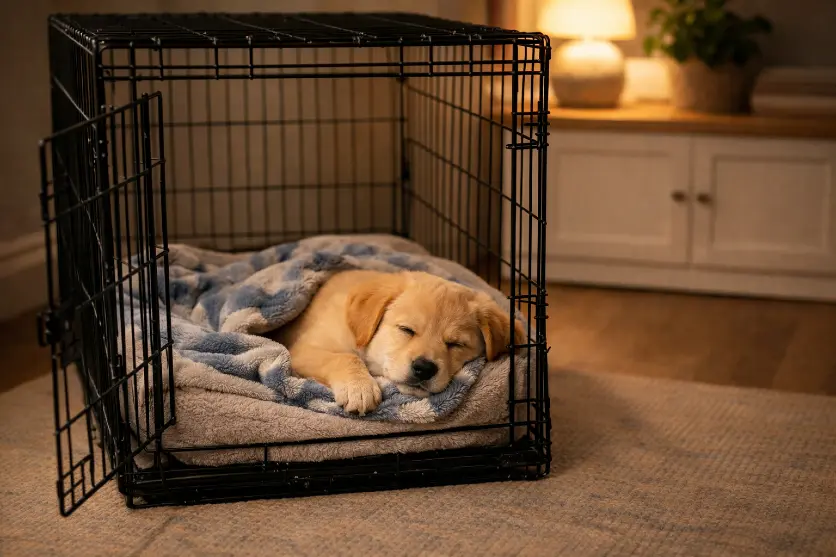
The crate should never be used as punishment. Instead, it should feel like a safe and comfortable resting space. Puppies should always be taken outside immediately after being let out of the crate. When used correctly, crate training reduces accidents and helps establish a clear routine.
Potty Training a Puppy at Night
Night-time routines are an important part of learning how to potty train a puppy without setbacks. Night-time potty training is often the most challenging part, especially during the first few weeks. Puppies have small bladders and may need one or two nighttime potty breaks. Taking your puppy out right before bedtime and reducing late-night food and water can help.
As your puppy grows, their ability to hold their bladder overnight improves naturally. Most puppies start sleeping through the night without needing a potty break by four to five months of age. Patience during this phase is essential, as night-time accidents are not intentional.
Helpful Night Tips
- Stop food and water 2–3 hours before bedtime
- Take one last potty break right before sleep
- Set an alarm for young puppies (first few weeks)
Most puppies start sleeping through the night by 4–5 months.
How to Potty Train a Puppy in Winter or Bad Weather
Cold, rainy, or snowy weather can make potty training more difficult, but it should not interrupt the routine. Puppies still need regular potty breaks, even when the weather is unpleasant. Using a sheltered potty area, keeping outings short, and protecting your puppy from extreme cold can make winter training easier.
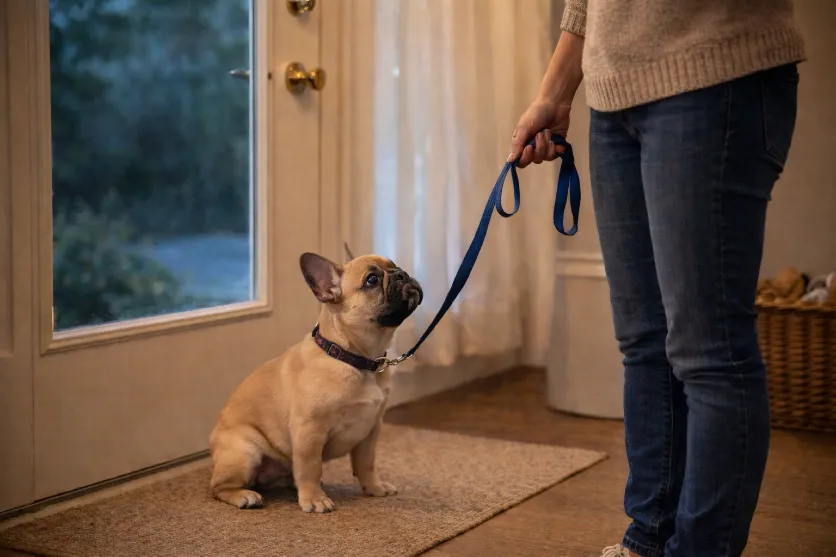
Some dog parents use indoor potty pads temporarily during harsh weather, especially for very young or small puppies. If you do, consistency is important so your puppy does not become confused about where to go.
Common Mistakes That Slow Potty Training
Many potty-training problems are caused by inconsistent routines, giving puppies too much freedom too soon, or expecting fast results. Punishing accidents can lead to fear and confusion, making training more difficult. Cleaning accidents thoroughly with an enzymatic cleaner help remove lingering smells that may encourage repeat accidents in the same spot. These are common mistakes on how to potty train a puppy.
Remember that potty training is a learning process. Calm guidance and repetition work far better than frustration or strict discipline.
What to Do If Your Dog Has an Accident Indoors?
If your puppy has an accident indoors, stay calm and avoid scolding or punishing them. Puppies do not associate punishment with past actions, and reacting harshly can create fear or anxiety, which may slow down potty training. Quietly clean the area using an enzymatic cleaner to completely remove the smell, as leftover scent can encourage your puppy to repeat the accident in the same spot.
After cleaning, gently guide your puppy back to their routine. Take them outside more frequently for the next few days and watch closely for early signs that they need to go, such as sniffing or circling. Accidents are a normal part of the learning process, and each one is simply a signal that your puppy needs a little more supervision or a slightly adjusted potty schedule.
Pet Parent Questions- Answered by Experts
How long does it take to potty train a puppy?
Most puppies take about 4–6 months to become reliably potty trained. When people ask how to potty train a puppy, they often worry about timelines and accidents. Some may learn faster, while others especially small breeds need more time. Accidents during this phase are normal and part of the learning process.
When should I start potty training my puppy?
You can start potty training as early as 8 weeks of age. Puppies may not have full bladder control, but starting early helps them learn routines and good habits.
Is crate training necessary?
Crate training is not required, but it is very helpful. It limits accidents by encouraging bladder control and makes potty training more structured and predictable.
Why does my puppy keep having accidents?
Accidents usually happen due to missed potty breaks, too much indoor freedom, or inconsistent schedules. They are learning mistakes, not bad behaviour.
Can puppies be potty trained at night?
Yes, but young puppies may need nighttime potty breaks. Most puppies sleep through the night by 4–5 months with consistent training.
Key Takeaways for Pet Parents
Potty training a puppy requires patience, time, and consistency, but it is one of the most rewarding stages of raising a dog. Every successful potty break strengthens your puppy’s understanding and builds trust between you and your pet. With a steady routine and positive reinforcement, accidents will gradually fade, and good habits will take their place.
Learning how to potty train a puppy takes patience, routine, and understanding, but the effort pays off with lifelong good habits. Every puppy learns at their own pace, and that is perfectly normal. Stay consistent, stay calm, and celebrate progress, no matter how small. Hope this guide on how to potty train a puppy is helpful for you.
Stay Connected With Us on Social Media
We love sharing practical dog care tips, training insights, and real pet-parent experiences beyond the blog. If you found this guide helpful, you can stay connected with us on social media for regular updates and quick tips.
- Instagram : @furryguide_
- Facebook : www.FurryGuide.com
- WhatsApp Channel : FurryGuide-Pet Care & Diet Tips
- Pinterest : @furryguide
Follow and join us to become part of a growing, responsible dog-parent community.